

African soldiers in Burma: the history behind Sheffield’s Never Look Back
Soldiers from across East and Southern Africa, including Uganda, Kenya, Tanganyika, Northern Rhodesia and Nyasaland, fought in Burma during the Second World War. Their experiences are explored in Never Look Back, a new play by Sheffield playwright John Rwothomack, whose own grandfather served as a signaller in Burma in 1944.
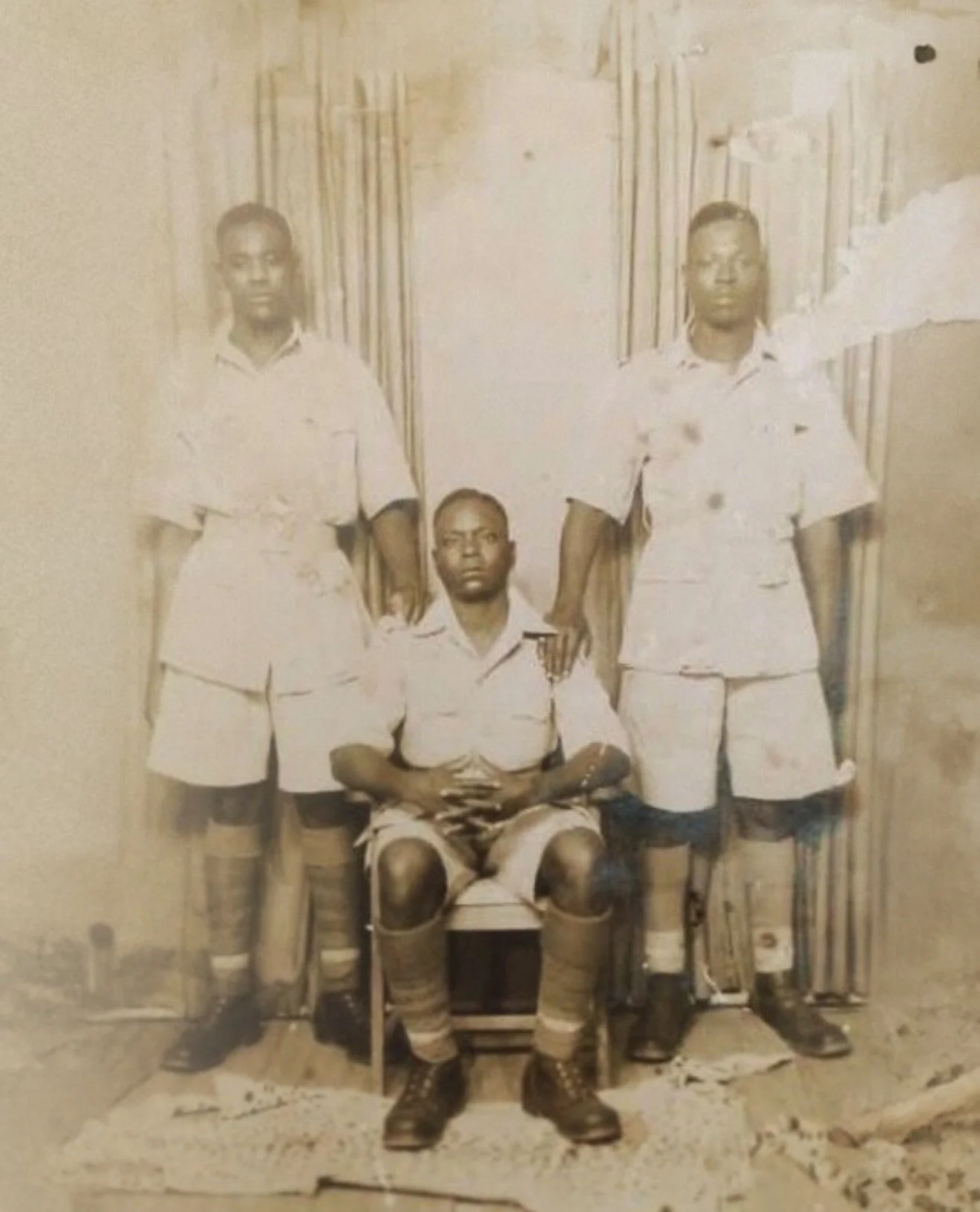
Rwoth John Omach Mandir II (seated centre), grandfather of Sheffield playwright John Rwothomack, pictured with two fellow servicemen. He served as a signaller in Burma in 1944. Credit: John Rwothomack family archive, reproduced with permission.
British military archives hold photographs of African soldiers marching towards Kalewa in Burma and crossing the Chindwin River in 1944. The men belonged to the 11th East African Division, one of the formations that fought against Japanese forces during the Second World War.
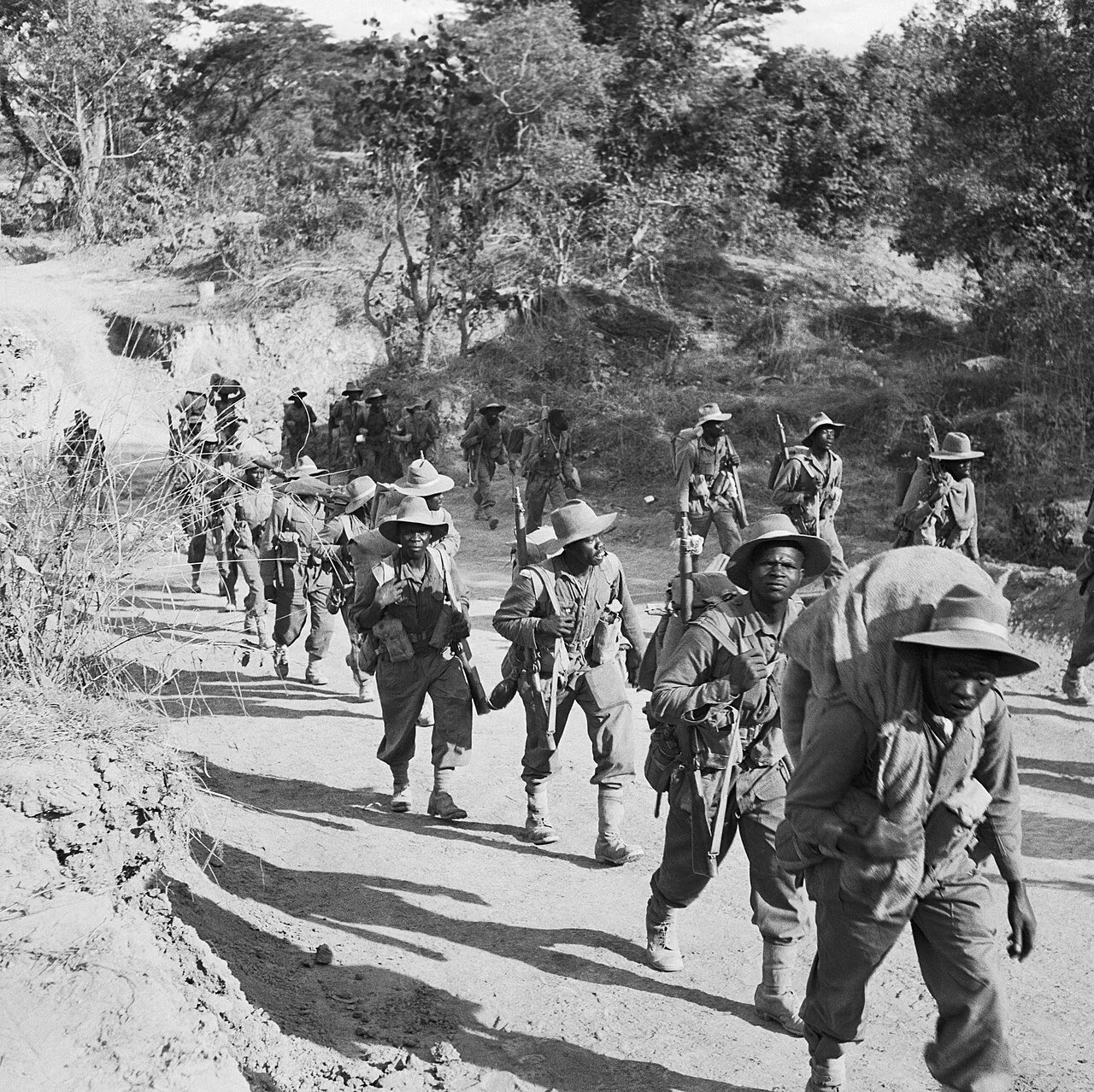
Troops of the 11th East African Division on the road to Kalewa, Burma, during the Chindwin River crossing. Credit: Sgt E. Watson, No. 9 Army Film & Photographic Unit / Imperial War Museums, SE 1884. Source: Wikimedia Commons.
The division drew on soldiers from British-controlled territories including Uganda, Kenya, Tanganyika and Nyasaland, alongside troops of the Northern Rhodesia Regiment. Today, those territories are Uganda, Kenya, Tanzania, Malawi and Zambia.
The National Army Museum documents the 1st Northern Rhodesia Battalion serving alongside the 4th (Uganda) Battalion of the King's African Rifles during the Burma campaign. Its collection also includes photographs of African soldiers receiving military honours, evidence of service that remains relatively unfamiliar in Britain's popular accounts of the war.
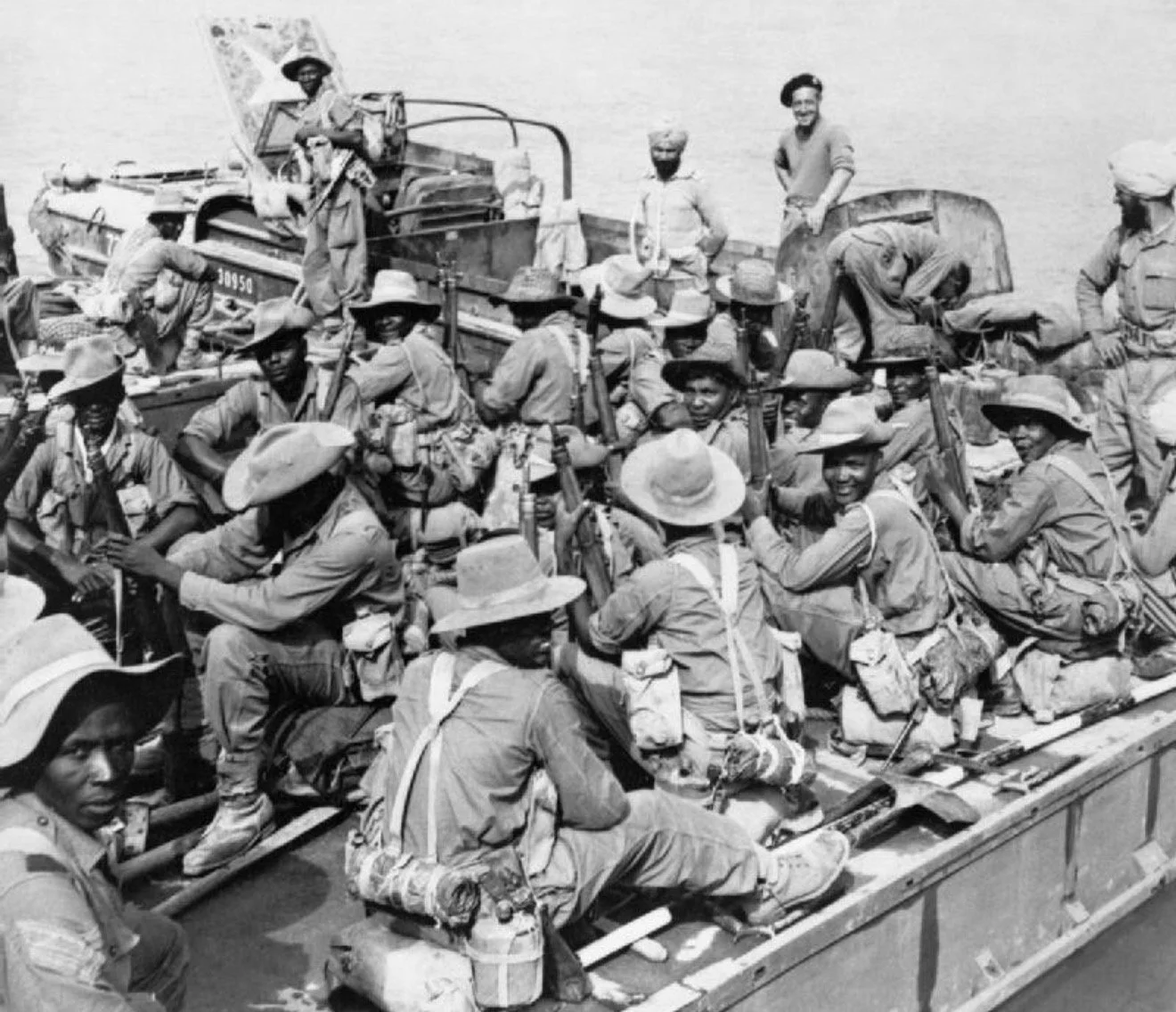
Soldiers of the 11th East African Division crossing the Chindwin River by ferry on their way towards Shwegyin, Burma, December 1944. Credit: No. 9 Army Film & Photographic Unit / Imperial War Museums, SE 923. Source: Wikimedia Commons.
In his Yorkshire Post column, John also makes clear that his interest extends beyond the stage. He hopes to see greater recognition of African wartime service through museums, monuments, books and other forms of public history.
The surviving military records offer a starting point. Photographs of soldiers from Northern Rhodesia, Nyasaland and Uganda place African participation firmly within the documented history of the Burma campaign. John's family photograph brings that history into a different setting, where a grandson is still trying to understand what his grandfather experienced.
As Britain marks Black History Month and approaches November's Remembrance commemorations, these accounts deserve closer attention in the histories taught, researched and publicly commemorated.
For audiences interested in African history, Black British history and the Second World War, Never Look Back brings these questions into the theatre through the relationship between two generations of one family.
See Never Look Back at the Crucible
27 February–13 March 2027
Crucible Theatre, Sheffield
Written by John Rwothomack
Directed by Daniel Bailey
A Sheffield Theatres and Roots Mbili Theatre production
View performance dates and book tickets
Groups: Parties of 10 or more can contact groupbookings@sheffieldtheatres.co.uk to enquire about reservations and available group rates.
Schools, colleges and universities: Sheffield Theatres offers educational group booking arrangements. A related Unlocking: Never Look Back workshop is scheduled for Thursday 11 March 2027. Enquire directly about eligibility, availability and age guidance. Box Office: 0114 249 6000
African Voices Platform is supporting audience development for Never Look Back. John's reflections on his family history are drawn from his published Yorkshire Post column; historical information has been supplemented by National Army Museum records.