The West Africa Integration and Investment Summit (WAIIS), held in Freetown, Sierra Leone, has been widely celebrated as a transformational platform for regional integration and economic cooperation. Framed as a departure from traditional diplomatic gatherings, the summit promised to move beyond political rhetoric and focus on investment transactions, bankable projects, and commercially driven partnerships under the ECOWAS and African Continental Free Trade Area (AfCFTA) frameworks. The Government of Sierra Leone, under the leadership of President Julius Maada Bio, deserves recognition for hosting the event and positioning the country as a venue for regional dialogue. The efforts of the lead organiser and Special Envoy, Hon. Dr. Kandeh K. Yumkella, also warrant acknowledgement. His vision of creating structured deal rooms and investment pipelines reflects a practical understanding that economic integration requires more than speeches and communiqués. The summit produced an ambitious package of commitments.
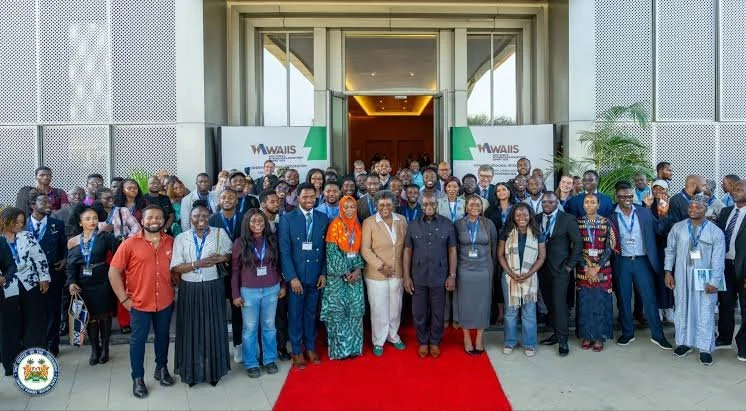
Delegates at the West Africa Integration and Investment Summit (WAIIS). Freetown, Sierra Leone
These included the Sierra Leone AgriConnect Compact, backed by a US$40 million World Bank grant, proposals for single-window trade systems, regional energy and infrastructure partnerships, and more than 170 projects reportedly packaged for investment across agriculture, energy, strategic minerals, and digital infrastructure. Yet before declaring WAIIS a success, a harder question must be asked:
What exactly makes this summit different from the dozens of regional initiatives, protocols, declarations, and investment conferences that have come before it? The uncomfortable reality is that West Africa does not suffer from a shortage of vision. It suffers from a chronic failure of execution.
For decades, ECOWAS governments have signed protocols promoting freer movement of goods, services, and people. Yet traders across the region continue to face illegal checkpoints, arbitrary levies, bureaucratic delays, fragmented customs systems, and inconsistent border regulations. The barriers to regional integration are not unknown. They have been identified, documented, and discussed for years. The real problem is that political leaders have often demonstrated greater enthusiasm for signing agreements than implementing them. Against this backdrop, the summit's investment announcements should be approached with caution rather than celebration. West Africa has become accustomed to headline-grabbing figures, ambitious promises, and declarations of transformational change. However, announced investments are not the same as deployed investments. Memoranda of Understanding are not factories. Project pipelines are not power plants. Conference agreements are not jobs.
Until projects reach financial closure, construction begins, and measurable economic outcomes emerge, the summit's achievements remain largely aspirational. More troubling is the summit's underlying assumption that capital is the missing ingredient in West Africa's development story. It is not.
The region's greatest challenges are rooted in governance, institutional weakness, regulatory inconsistency, corruption, and policy uncertainty. These are problems that investment alone cannot solve. For decades, billions of dollars have flowed into various African economies through aid, natural resource extraction, foreign direct investment, and development financing. Yet structural transformation has remained limited because capital entered systems that were often unable or unwilling to convert investment into broad-based economic development. Without institutional reform, WAIIS risks treating the symptoms of underdevelopment while ignoring its causes.
The summit's emphasis on strategic minerals is particularly concerning. Across Africa, the extraction of natural resources has too often enriched foreign corporations, politically connected elites, and narrow economic interests while creating limited value for ordinary citizens.
Raw minerals continue to leave the continent for processing abroad, while African countries import higher-value manufactured products derived from their own resources. Unless binding local-content requirements, domestic processing obligations, and technology-transfer provisions are embedded within these investment agreements, WAIIS may simply reinforce the extractive economic model that has constrained African industrialisation for generations.
The same concern applies to agriculture. The AgriConnect Compact has been presented as a major step toward food security and agricultural transformation. Yet funding alone will not solve the structural weaknesses that continue to undermine agricultural productivity across West Africa.
Farmers do not merely lack financing. They face poor feeder roads, inadequate storage facilities, limited irrigation systems, weak access to mechanisation, unreliable electricity, inefficient transportation networks, poor extension services, and unstable markets.
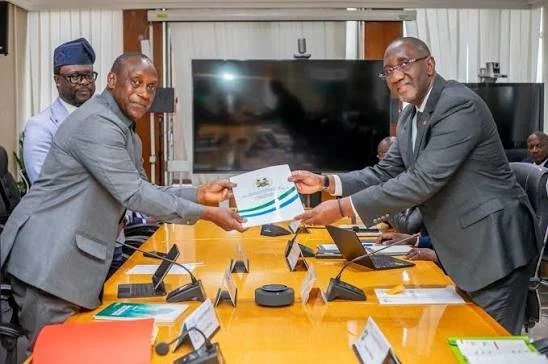
Unless governments address these foundational constraints, agricultural investments risk becoming another cycle of spending that produces reports, workshops, and statistics rather than meaningful transformation in rural livelihoods. Equally problematic is the persistent belief that regional integration can be achieved through declarations while national political interests remain unchanged. The truth is that many governments publicly champion regional integration while simultaneously maintaining policies that undermine it. Leaders routinely endorse free trade in conference halls but tolerate border practices that restrict commerce at home. They speak about regional markets while implementing measures designed to protect domestic political interests. They celebrate economic cooperation while preserving bureaucratic systems that benefit entrenched networks of patronage and rent-seeking.
This contradiction lies at the heart of West Africa's integration challenge. No summit, regardless of its sophistication, can resolve this contradiction unless governments are prepared to make politically costly decisions. The summit's emphasis on AI-enabled project tracking and commitment-monitoring systems also deserves scrutiny. Technology can improve transparency. Technology can improve reporting.
Technology can improve data management. But technology cannot create political will. Digital dashboards do not dismantle corruption.
Commitment registers do not enforce accountability. Artificial intelligence does not replace leadership. If governments fail to honour their obligations, sophisticated monitoring tools will merely provide a more efficient way of documenting failure. Perhaps the most fundamental weakness of the summit is the absence of a serious discussion about accountability. Who will be held responsible if projects fail to materialise?
Who will account for projects that do not achieve financial closure?
Who will explain cost overruns, implementation delays, abandoned infrastructure, or unmet investment pledges?
The history of regional development initiatives across Africa is littered with projects announced with great enthusiasm and later forgotten without consequence. Without enforceable accountability mechanisms, WAIIS risks following the same trajectory.
The summit's discussion of diaspora capital is equally ambitious but insufficiently grounded in reality.
The West African diaspora contributes billions annually through remittances, yet many governments continue to struggle with issues of transparency, investor protection, regulatory predictability, and public trust. Diaspora communities cannot be expected to channel significant long-term investment into environments where governance risks remain high and policy frameworks remain unstable.
Governments must first establish credibility before expecting large-scale diaspora participation in development financing.
Ultimately, the most important question remains unanswered:
Who will benefit from WAIIS?
Will the outcomes improve the lives of farmers, traders, entrepreneurs, young graduates, and small businesses?
Will they create industries capable of generating sustainable employment?
Will they reduce poverty and strengthen productive capacity?
Or will the primary beneficiaries be political elites, foreign investors, consultants, and corporations that have historically captured disproportionate gains from development initiatives?
These are not cynical questions. They are necessary questions.Because history offers ample reason for scepticism.
The hard truth is that West Africa does not suffer from a shortage of summits, investment forums, declarations, protocols, policy frameworks, or grand visions of regional transformation.
It suffers from a shortage of implementation, weak accountability, political inconsistency, inability of governments to translate commitments into outcomes. Until these structural weaknesses are confronted, WAIIS risks becoming another well-publicised gathering that generates optimism in the short term but delivers disappointment in the long term. The summit may have succeeded in attracting attention, creating momentum and generating hope. But hope is not an economic strategy.
And unless governments demonstrate the political courage to dismantle barriers, enforce accountability, promote genuine industrialisation, and prioritise implementation over publicity, WAIIS will be remembered not as a turning point in West Africa's economic history but as another ambitious promise that failed to escape the gravitational pull of the region's longstanding governance challenges. The summit has generated optimism. Whether it generates transformation remains to be seen.