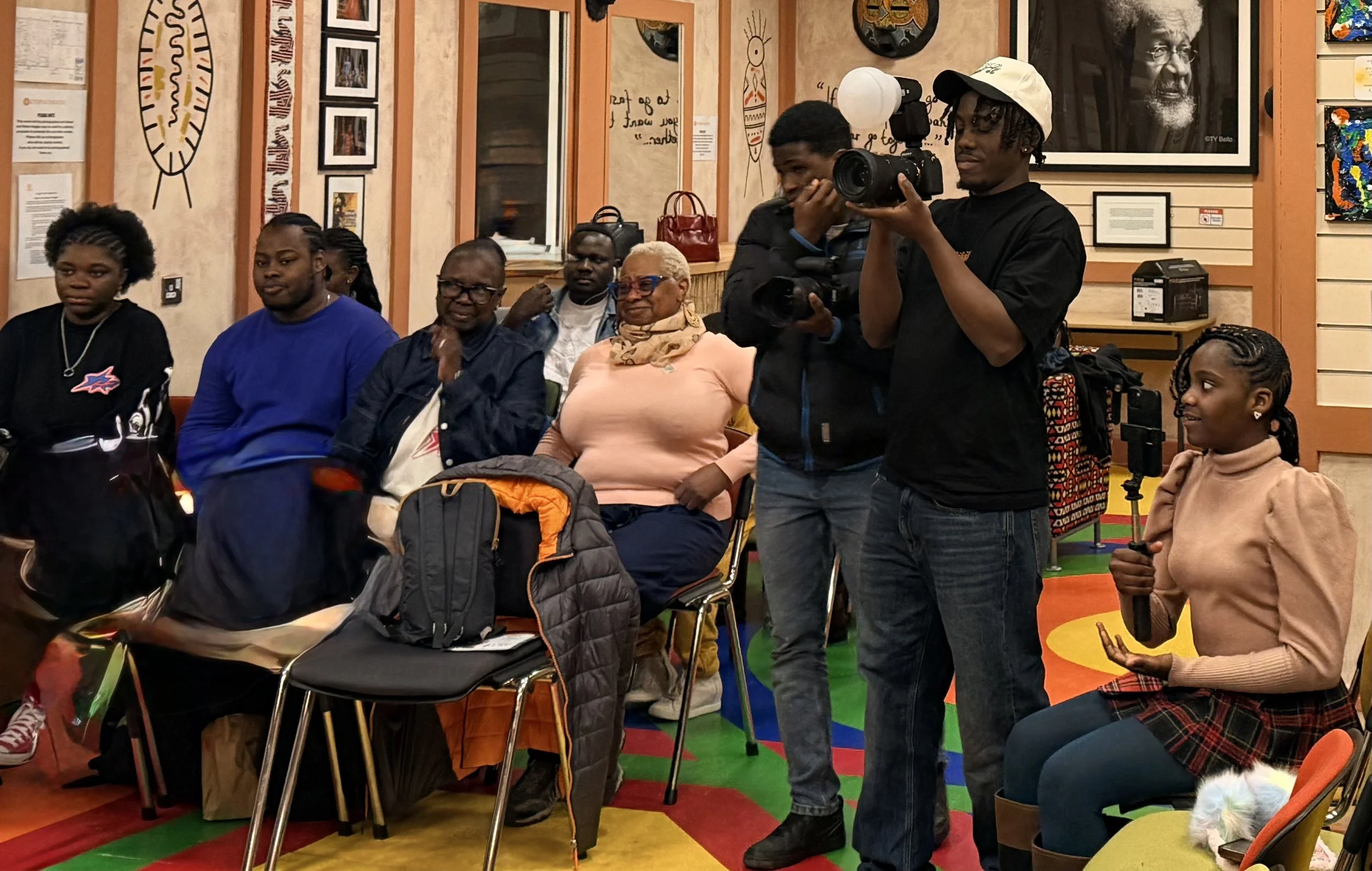
Kayefi’s Báòkú: Time and Chance opens in Sheffield with a listening session shaped by experience, instinct and continuity
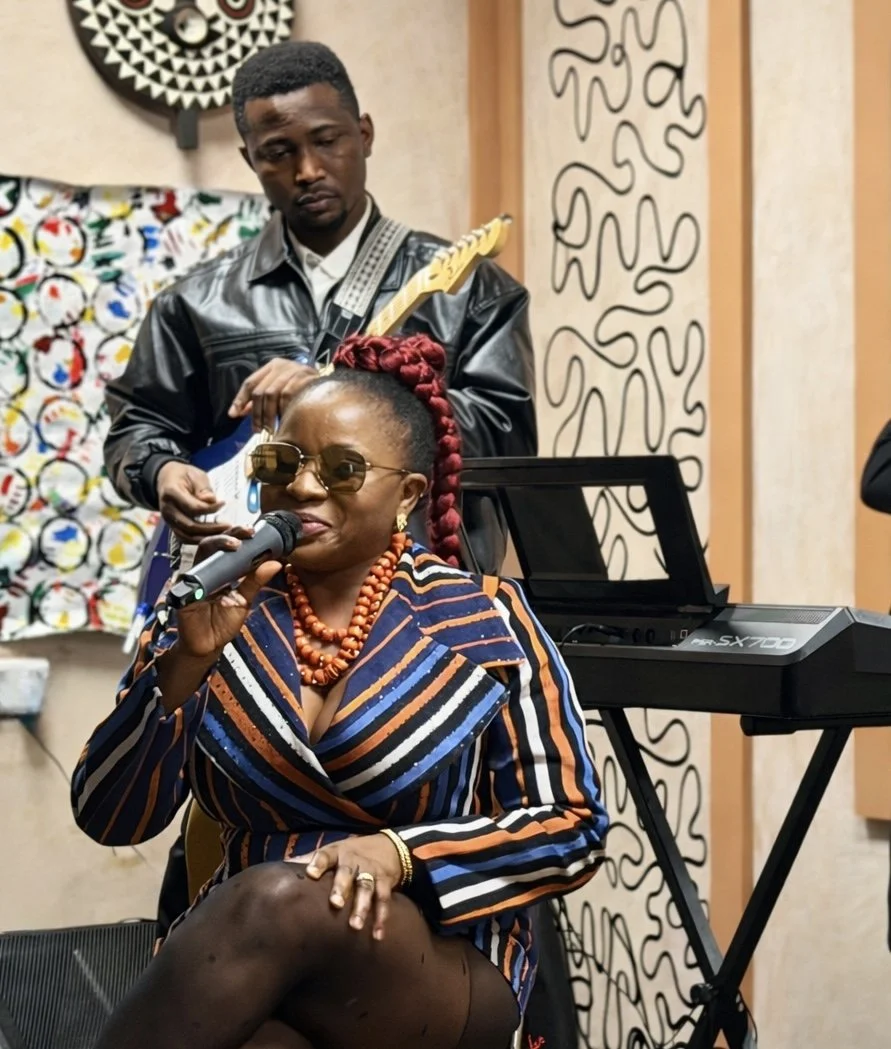
Kayefi introducing audiences to her new project, Báòkú: Time and Chance
Kayefi’s Sheffield listening session for Báòkú: Time and Chance felt less like a launch and more like an opening.
Hosted by African Voices Platform radio show host, Supergirl on Radio aka Adeyinka Akinremi, the evening carried the ease of a community gathering while holding the weight of a serious body of work being shared in real time. Kayefi, now fully relocated to Sheffield from London, entered the space in an aso-oke jacket dress with a coral necklace, seated with microphone in hand and backed by a live band that set the tone from the outset.
The ensemble gave the album its physical grounding. Electric guitar shaping the melodic line, while two keyboard stations extended the harmonic space. On drums was Ajide Adeyemi, fresh from hosting ÀTÙPÀ in Doncaster, holding everything together with control and sensitivity. Two types of shekere were present in the room, adding visual and cultural texture alongside the performance. At the helm of these instruments were Owasoyen Raphael Abiola (Owas) and Emmanuel Akinwamide (EmmyLarry)
Two songs in, the sound was already settled.
The second track, Folorunsho, was performed live. Kayefi picked up the shakers and joined the rhythm herself, shifting the dynamic in the room. She was not positioned in front of the band. She was moving within it.
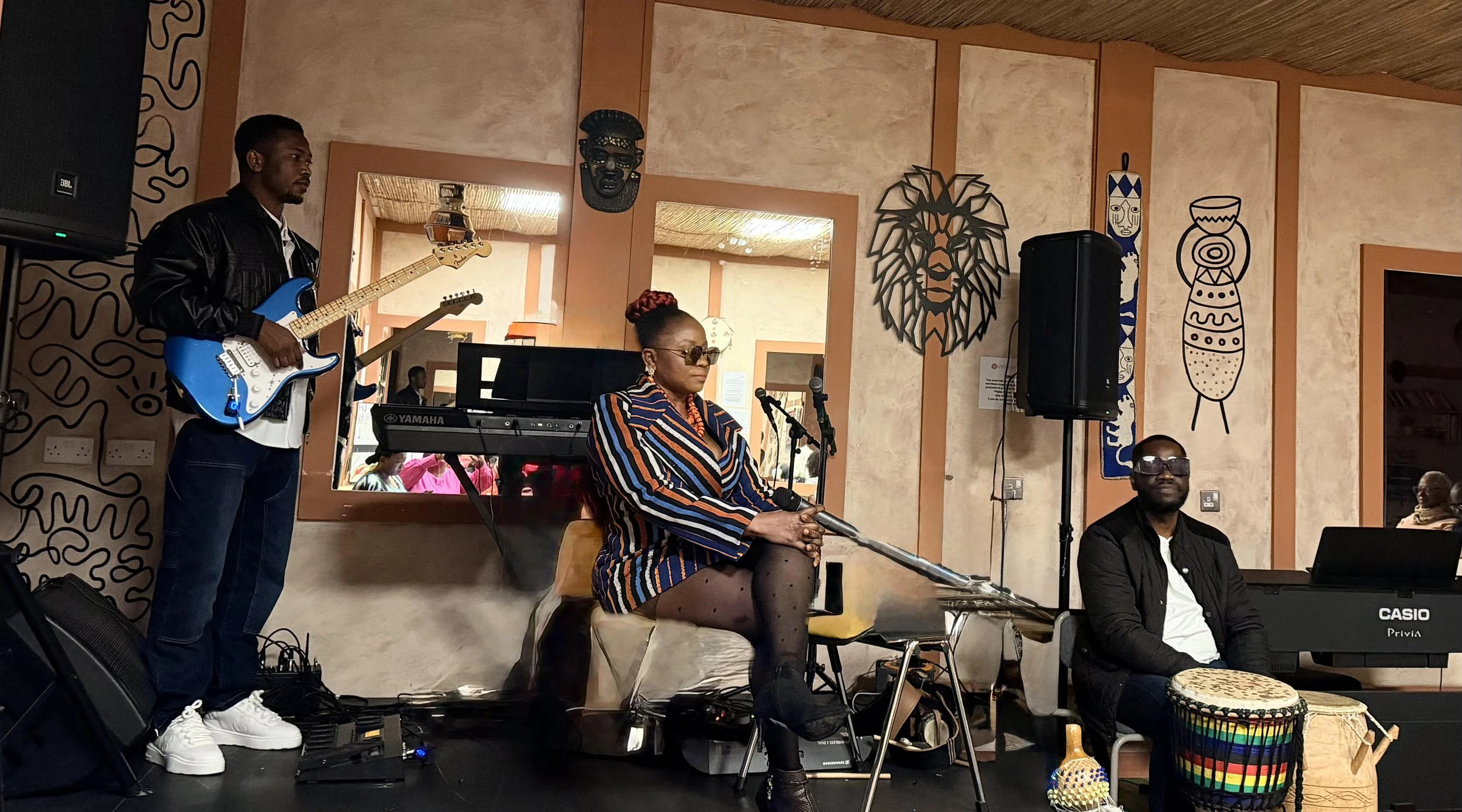
Kayefi and her band listen in to some of her songs from her album, Báòkú: Time and Chance
By the time she introduced Ghetto, the third track, the audience had already moved with her.
Ghetto landed with quiet clarity. Kayefi reflected through the lens of her own child, speaking to a reality where something as simple as new books had once been a novelty. It was not framed for effect. It was stated plainly, and that is what gave it weight. The sentiment carried echoes of Ojeje, but here it was more specific, grounded in lived conditions and what is carried across generations.
Ire, the fourth track, moved between English and Yoruba without friction. The languages sat alongside each other naturally, reflecting how the work lives rather than performing a device.
After the fourth song, the music paused and the conversation opened.
Kayefi spoke about her process with a directness that reframed the evening. She described writing across language instinctively, including a song built around the word “Ovi”, which she later learned means “children” in Egun.
“I don’t know what it means,” she said. “I just hear it and I sing it.”
She also spoke about the themes that return to her most often. Heartbreak and inspiration. “We are plenty,” she said, in reference to shared human experience. The intention is not to isolate feeling, but to place it in common.
That grounding carried into Nedu.
There was a teasing of typically Congolese rumba in its sound, just enough to signal continental similarities before pulling back. When the song opened out, the audience moved almost immediately into dance, and the band followed shifting the ambience from attentive listening shifted into participation.
Ko mai lo brought the room back inward. Gentle and sentimental, it carried the line, “Home is where the heart is, you be the music and I’ll be the lyric,” with restraint. A distinct saxophone line, carried through the recorded track, sat against the live drum arrangement, allowing the song space rather than filling it.
Before the title track came Ma jo lo, which Kayefi shared she had originally called Theory. She spoke about the people who assure you they will stand by you, only to disappear when you need them most. There was no bitterness in how she told it.
“The only person you can completely trust is yourself,” she said, before adding, almost in the same breath, that we still need each other.
Placed just before the title track, it held that tension.
When title track Báòkú: Time and Chance arrived, it did so without strain. By then, the room was already with her.
Biribiri followed and opened everything back out. The audience moved again. Kayefi, still seated, danced in place. Moments in the lyrics leaned toward encouragement, including the phrase “rise up”, but they sat within the rhythm rather than sitting on top of it.
Midway through the evening, Kayefi paused to give thanks to her Nigerian band, collaborators she has worked with for over 18 years and continues to create with remotely via video. It was a reminder that the sound in the room did not begin here. It has been carried, shaped and sustained over time. She also credited producers including ID Cabasa and Ayode, making visible the wider network behind the work.
One of the most personal moments came with Erebe.
Kayefi described it as drawn from her own life. An almost moment. A near crossing into sexual experience, interrupted by the remembered voice of her mother. The lessons she carried were simple and enduring. Take your time. Do not rush what you are not ready for.
In the snippet shared, Erebe held subtle hints of jazz. Not dominant, but present in its phrasing and space. The song did not push forward. It allowed itself to sit.
By the time Ponraele, the eleventh track, played, the album had already established its language. It no longer needed to introduce itself.
Mind Your Business followed as the penultimate track. It carried a different kind of firmness. Not confrontation, but boundary. After an album that had opened so much, it marked a clear sense of what remains held.
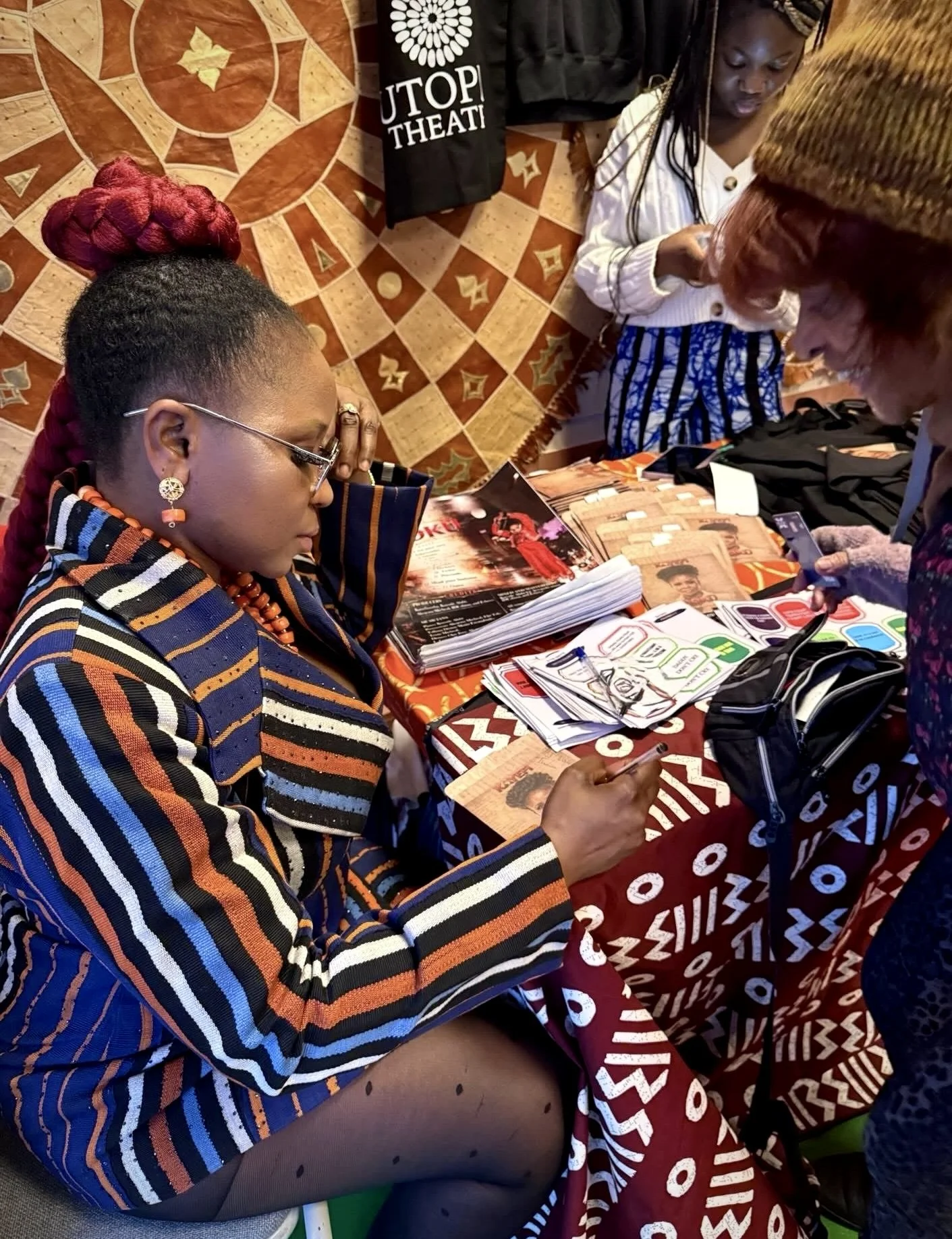
Album signing
Across the evening, what became clear is that Kayefi writes and sings from experience. Not as a declaration, but as a practice. The songs draw from what has been lived, remembered and understood over time.
Looking ahead, she shared that her next album may hold more love songs. “I’ve found a lot of love in Sheffield,” she said. It was a simple statement that shifted the tone of what may come next.
Báòkú: Time and Chance is a body of work that continues from here. It launches on all streaming platforms on 24th April 2026